
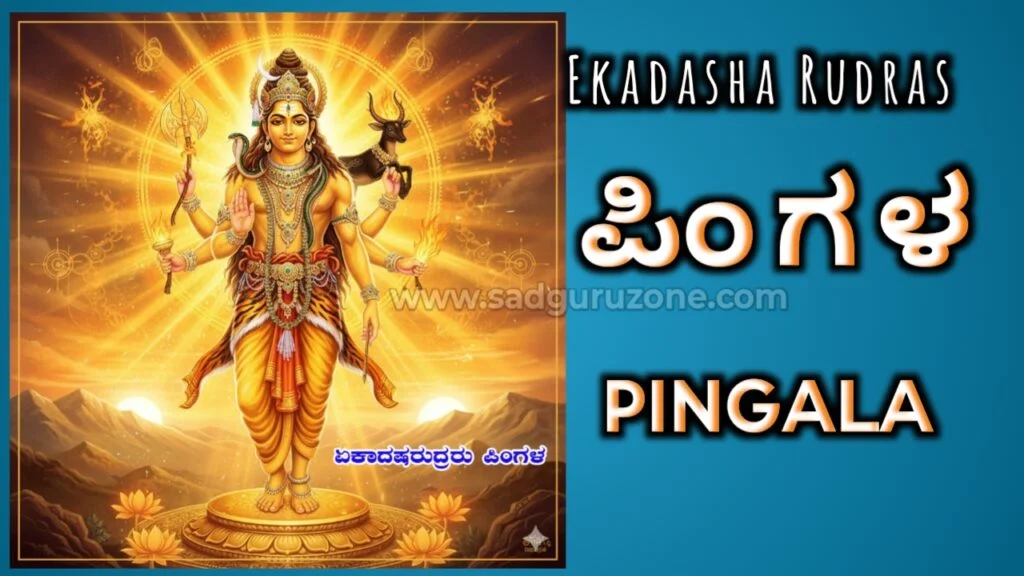

Pingala: The Golden Solar Rudra

Who is Pingala among the Ashta Rudras?
Pingala is one of the Ekadasha Rudras (eleven Rudras), not specifically the Ashta Rudras (eight Rudras). He represents the second among the eleven divine manifestations of Lord Shiva, specifically embodying the golden-yellow solar aspect of Shiva’s cosmic energy. According to the Shiva Purana, Pingala emerged when Lord Shiva manifested as eleven Rudras to aid the gods in their battle against demons, born from sage Kashyapa and his wife Surabhi.
The eleven Rudras as listed in various scriptures include: Kapali, Pingala, Bhima, Virupaksha, Vilohita, Shastra, Ajapada, Ahirbudhnya, Shambhu, Chanda, and Bhava. Different Puranas provide varying names, but Pingala consistently appears as a prominent solar manifestation across texts.
Personality and Characteristics
Pingala embodies the dynamic solar energy and represents several key spiritual attributes.
Solar Energy Manifestation: Pingala symbolizes the sun’s life-giving radiance and vitality. He represents the fiery, dynamic aspect of creation that drives all existence. His energy is characterized as warm, active, and stimulating, embodying masculine solar power.
Rhythmic Cosmic Pulse: Pingala represents the universal rhythm that governs the cycles of creation, preservation, and destruction. He is seen as the cosmic conductor orchestrating the movements of celestial bodies and the flow of terrestrial energies. This rhythmic aspect connects to the heartbeat of the universe itself.
Life-Affirming Powers: Unlike some of the fiercer Rudras, Pingala embodies vitality, strength, and the fire of self-realization. He represents renewal, spiritual awakening, and the transformation of consciousness through solar illumination.
Connection to Pingala Nadi: In yogic anatomy, Pingala is intimately connected to the Pingala Nadi, one of the three principal energy channels in the human body. This solar channel controls essential life processes, imparts vitality and strength, and is associated with masculine energy, logic, and the right side of the body.
What the Vedas Say About Pingala
While direct Vedic references to Pingala as a specific Rudra are limited in the search results, the broader Vedic context reveals important connections.
Rudra in Vedic Literature: The Rig Veda contains four hymns dedicated to Rudra, describing him in innumerable forms and colors (puru-rupa). Rudra is depicted as having flowing golden hair, a lustrous body decorated with ornaments, and a complexion that is brown, tawny, or shining like gold.
Solar Associations: The Vedic texts describe Rudra as shining like the sun and glittering like gold, which aligns perfectly with Pingala’s solar nature. The name Pingala itself means “tawny” or “orange” in Sanskrit, directly connecting to solar imagery.
Cosmic Functions: Vedic literature portrays Rudra as the architect of the universe (stapathi) and commander-in-chief (Senani) of divine forces. Pingala, as a Rudra manifestation, participates in this cosmic ordering through his solar rhythmic energy.


