
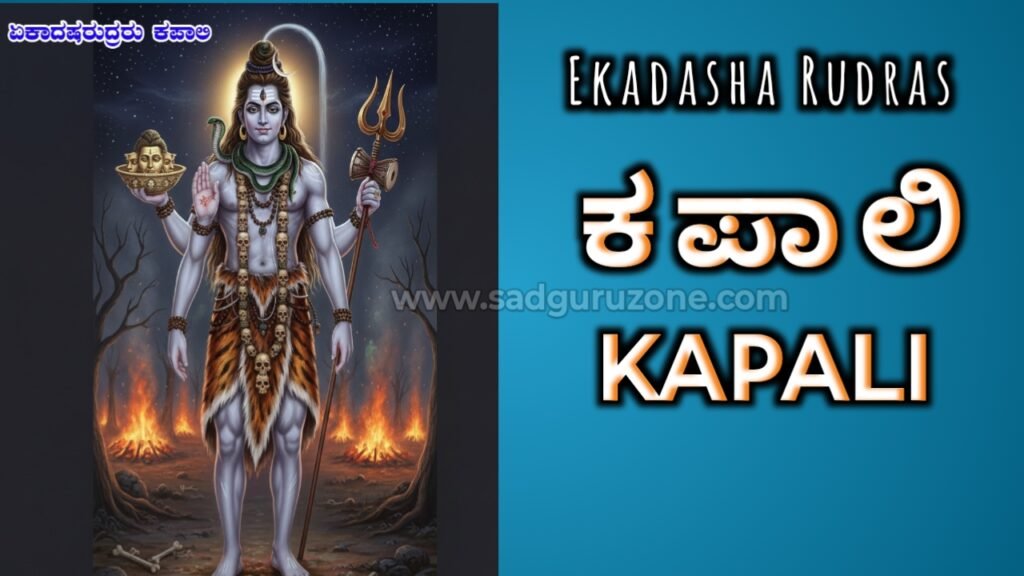


Kapali is one of the Ekadasha Rudras (Eleven Rudras), representing a profound and transformative aspect of Lord Shiva in Hindu mythology. The name “Kapali” literally means “the one who holds the skull” or “skull-bearer,” deriving from the Sanskrit word “kapala” meaning skull. This fierce manifestation embodies the spiritual teachings of fearless acceptance of mortality and the transcendence of ego.
Significance in Vedic Literature
Kapali’s presence in Vedic literature is deeply rooted in the Shatarudriya (also known as Sri Rudram), the sixteenth chapter of the Vajasaneyi Samhita of the Yajurveda. This sacred hymn contains numerous epithets and names of Rudra, establishing the foundation for the later Puranic development of the eleven Rudra manifestations. While specific individual descriptions of Kapali are more elaborate in Puranic texts, the Vedic tradition laid the groundwork by establishing Rudra as a deity with both fierce and benevolent aspects.
The Shatarudriya presents Rudra through hundreds of names and attributes, depicting his various cosmic functions and manifestations. This Vedic hymn is considered one of the most powerful mantras in Sanskrit literature, where devotees appeal to Rudra under diverse epithets, including references to his association with skulls and cremation grounds.
Attributes and Iconography
Physical Appearance
Kapali is traditionally depicted with several distinctive iconographic elements:
- Skull Bowl (Kapala): The most defining attribute, representing Brahma’s fifth head that became attached to Shiva’s hand
- Fierce Countenance: Displaying an intense but divine expression representing transformation and spiritual awakening
- Matted Hair (Jatamakuta): Adorned with serpents and the crescent moon, symbolizing ascetic renunciation
- Three Eyes: The third eye bestowing inward vision and capable of burning destruction
- Blue Throat (Neelkantha): From holding the cosmic poison that threatened to destroy the world
- Sacred Ash (Vibhuti): Smeared across the body, representing the ashes of cremated corpses and transcendence of material existence
Sacred Ornaments and Weapons
- Serpent Garland: Represents mastery over death and time
- Garland of Skulls: Symbolizing the cycle of life, death, and rebirth
- Trident: Representing the three gunas (qualities of nature) and the power to destroy ignorance
- Tiger Skin: Worn as a garment, symbolizing the conquest of desires and ego
- Rudraksha Beads: Sacred to Rudra, representing spiritual protection
Sacred Associations
Kapali is intrinsically connected to cremation grounds (Shmashana), which hold deep spiritual significance in Hindu tradition. These locations represent not merely places of death but realms of profound spiritual transformation where all illusions collapse and seekers confront the ultimate reality of existence.
Spiritual Purpose and Cosmic Function
Fearlessness in Death
Kapali’s primary spiritual teaching revolves around fearless acceptance of mortality. The skull he carries serves as a constant reminder of life’s impermanence, encouraging devotees to transcend the fear of death and embrace the eternal nature of the soul.
Ego Destruction
The form represents the destruction of ego (ahamkara) and attachment to material existence. By accepting mortality, practitioners can prioritize spiritual fulfillment over superficial pursuits, leading to liberation from the cycle of birth and death.
Spiritual Transformation
Kapali embodies the principle that authentic spiritual growth requires the death of false identities. This destruction is not negative but represents the necessary dissolution of limiting beliefs and ego-structures that prevent spiritual evolution.
Compassion for All Beings
As Bhootnath (Lord of Spirits), Kapali demonstrates compassion for even the most forsaken souls, including wandering spirits in cremation grounds. This reflects his role as a protector of all beings, regardless of their state or condition.
The Bhikshatana Connection
Kapali is closely associated with Bhikshatana, Shiva’s form as the wandering mendicant. According to Puranic literature, after severing Brahma’s fifth head, Shiva had to wander as a naked ascetic (Kapali) with the skull as his begging bowl to atone for the sin of Brahmahatya (killing a Brahmin). This wandering continued until he reached the sacred city of Varanasi, where the skull finally fell away.
This narrative represents:
- Divine Humility: Even the supreme deity must undergo penance for his actions
- Universal Justice: No being, however divine, is above cosmic law
- Redemption: The possibility of atonement and spiritual purification


